1. Arrival in the City of Bridges
Pittsburgh greeted with a palette of deep iron grays, weathered reds, and the unexpected green of the surrounding hills. There’s a moment when the rivers intersect and the city unfolds like an origami machine: bridges everywhere, steel ribs cutting across the water, stone and iron holding stories in tension. It was here the journey began — not just a trip through a city, but a walk through time, among ghosts of foundries and the pulse of innovation.
The airport highway swept into the Fort Pitt Tunnel. Darkness swallowed everything for a few seconds before bursting open onto the Fort Pitt Bridge, and suddenly the Golden Triangle lay ahead. That entrance — it doesn’t just show you Pittsburgh, it reveals it. It’s impossible not to feel the weight of history in that moment, as if the city still carries the soot on its skin.
2. Walking Among Giants: The Strip District and Iron Echoes
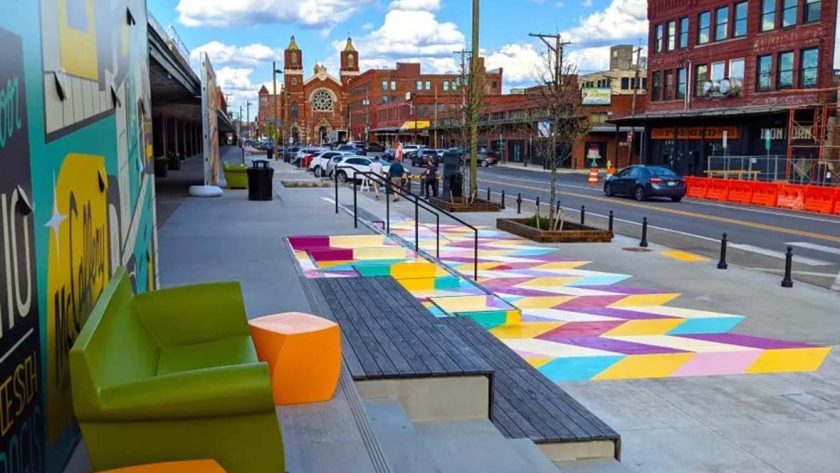
The first morning’s step was deliberate: the Strip District. Even early, the scent of roasting coffee beans and freshly baked bread tangled with a faint trace of motor oil. It was a market day — rows of vendors selling peppers, pierogis, and prosciutto, with old freight tracks snaking between stalls and storefronts. The bones of industry were still visible. Many of the old produce terminals and warehouses have become studios and lofts, but their brick skins and iron guts remain.
At 21st Street stood the former Pennsylvania Railroad produce terminal, now reborn as a food hall. It’s easy to overlook the columns of steel rivets and original pulley systems suspended from the rafters — remnants of the logistics dance that once fed steelworkers and coal loaders. Just down the street, the Society for Contemporary Craft hosted an exhibit of industrial-inspired installations — glowing steel sculptures, textile works dyed with coal dust, reinterpreting the past without whitewashing it.
A detour led into the still-active portions of the Strip: wholesale importers, machine shops, and auto garages tucked behind neon-lit ethnic grocers. The fusion of grit and grace is tangible. At an old blacksmith’s door, a faded sign read “OPEN FOR SHARPENING,” and it felt more poetic than practical.
3. In the Shadow of Furnaces: The Carrie Blast Furnaces
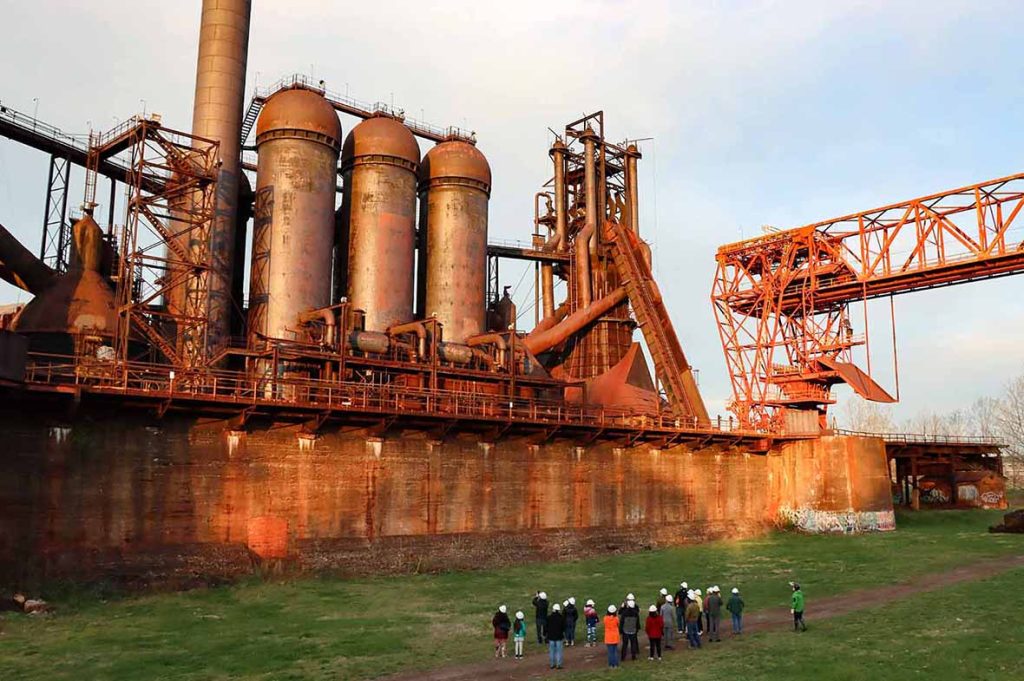
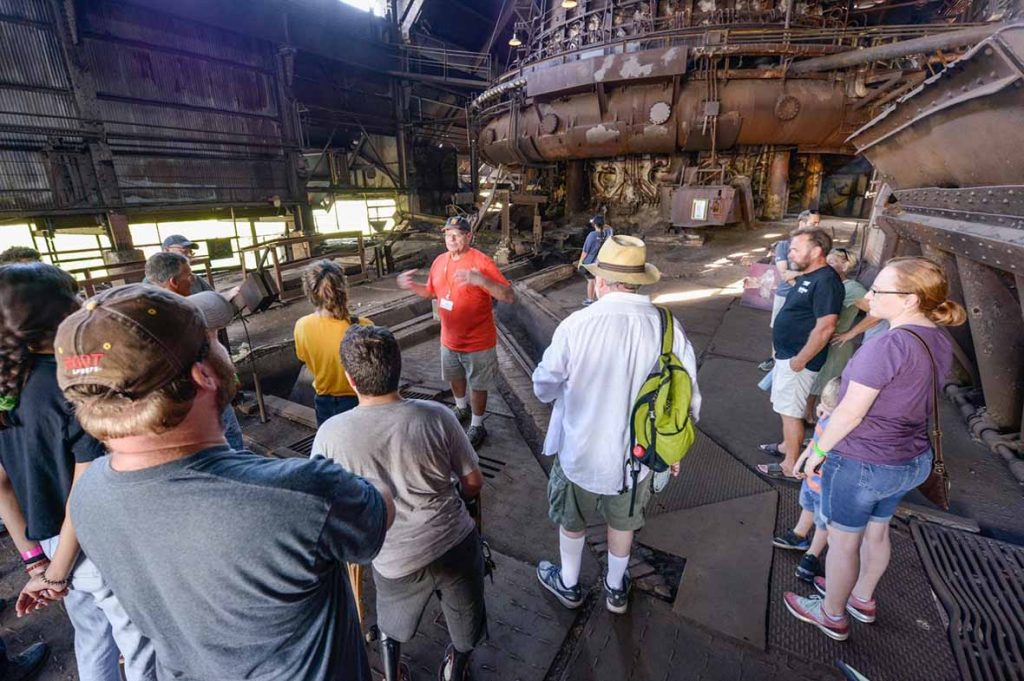
Midday took a dramatic turn — the rusted giants awaited in Rankin. The Carrie Blast Furnaces. Once part of the mighty Homestead Steel Works, these monolithic towers now stand as skeletal cathedrals to America’s industrial age. The guided tour led beneath riveted beams and crumbling catwalks, with the guide’s voice echoing against the hard skin of furnace #6.
The site has been preserved not as a monument but as a living text. Graffiti mingles with oxidized iron. Wildflowers push through cracks in the cooling tracks. The original charging machine, a monstrous contraption with oversized pistons and levers, still looms like a fossilized dinosaur. One could almost hear the roar of molten metal and the shout of workers in the echo of the wind.
The iron production process was explained in detail: from raw ore to pig iron, the alchemy of fire, limestone, and coke. Diagrams and historic photographs brought the human scale back — men with soot-darkened faces, working twelve-hour shifts in blistering heat. Every footstep through this space added weight to the air, as if the ghosts of the labor force still moved through the scaffolding.
The art installations within the furnaces struck an unusual harmony. Sculptures made of repurposed steel, welded poetry, and kinetic pieces spun by the breeze made the place feel less like a ruin and more like an awakening.
4. Echoes of Resistance: Homestead and the Battle for Labor
Crossing the Monongahela River, the road entered Homestead. The irony of the Homestead Works Mall — a shopping complex built on the grounds of what was once one of the most productive steel mills in the world — didn’t go unnoticed. But nearby, at the Pump House, history stood stubborn.
The Pump House, with its red brick and quiet dignity, was the flashpoint of the 1892 Homestead Strike. It was here that Pinkerton agents arrived by river barge and clashed with striking steelworkers in one of the bloodiest battles in American labor history. The small stone building now houses interpretive panels and timelines, yet outside its doors the steel of the Homestead Grays Bridge hums with modern traffic.
A short walk brought the memorial plaques into view. There were no grand monuments — just sober, factual statements engraved in bronze and steel, as if still in deference to the laborers’ stoicism. The Carnegie Library nearby was another artifact of the past: part philanthropy, part PR balm, built in the aftermath of the strike by the steel magnate himself.
5. Steel Bones, Glass Veins: Downtown Pittsburgh and Mellon Square
The city center presented a different story. Here, the ghosts of industry whispered behind mirrored glass towers and polished sidewalks. The Gulf Tower, once the tallest in the city, still lit up in weather-coded colors. The Frick Building, funded by coke and steel wealth, stood coldly elegant. But look closer — even in these halls of finance and corporate reinvention, steel is never far.
Mellon Square offered a resting point. Designed in the 1950s, it was one of the first “garden plazas” built over a parking garage — a modernist response to urban renewal. The geometric fountains and green space overlaid concrete and iron with rhythm and relief. Beneath the square, old trolley lines are buried like capillaries under skin. The revitalization efforts here respected that duality — every bench and planter box seemed to remember what had been buried beneath.
At the Pittsburgh History & Landmarks Foundation office nearby, vintage maps and documents from the Gilded Age revealed how tightly knit the fortunes of the city were to iron ore and capital flows. The financial skyscrapers didn’t just house numbers; they were the vaults that stored the ambitions of barons and the pensions of workers.
6. Into the Workshop: The Heinz History Center
Further north, in the Strip once again, the Heinz History Center opened its arms like a time machine. Six floors of immersive exhibits traced the city’s timeline, from its role in the French and Indian War to its industrial rise. But it was the Western Pennsylvania Sports Museum tucked within that offered an unexpected parallel — how steel towns bred tough athletes, how laborers became legends in other fields.
The exhibit on Pittsburgh’s industrial heyday included a life-size replica of a steel mill, complete with soundscapes of clanging iron, shouts in multiple languages, and simulated molten flow. Tools were displayed with reverence, and handwritten letters from immigrant families — Polish, Italian, Slovak — told stories in ink of lives built beside furnaces.
One display focused on the transformation from industrial to tech: the role of robotics, the emergence of Carnegie Mellon as a research powerhouse, and the moment when Pittsburgh chose reinvention over decline.
7. Oakland and the Academy of Thought
A shift in atmosphere came upon entering Oakland. Home to the University of Pittsburgh and Carnegie Mellon, this district carried the scent of ideas. The Cathedral of Learning rose like a limestone skyscraper of purpose. Inside, the Nationality Rooms preserved the memory of Pittsburgh’s immigrant foundations — classrooms designed in the architectural styles of their countries of origin.
Science and industry remained entwined in the Carnegie Museums. The Carnegie Museum of Natural History housed dinosaur bones and mineral collections extracted from the same hills that once bore iron. The Museum of Art showcased industrial design alongside Impressionist masterpieces, as if to remind viewers that beauty can be forged as well as painted.
At CMU’s Robotics Institute, a window into the future opened wide. The birthplace of autonomous vehicles and AI experimentation sits on soil once blackened by coal smoke. The tension between old industry and new innovation created not friction, but propulsion.
8. Lawrenceville: Where Iron Meets Ink
Late afternoon led to Lawrenceville — once the heart of steel fabrication, now the hub of creative fabrication. The transformation was visceral. Former machine shops now host screen printers, ceramicists, independent publishers, and furniture makers working with reclaimed steel and timber.
Stopping into a coffee shop built inside an old tool-and-die factory, the original hoists still hung from the beams. Local artists displayed work made from industrial salvage. A few blocks away, the Arsenal Park preserved the site of the Allegheny Arsenal, which once supplied Union troops with munitions. The explosion of 1862, which killed dozens of female workers, is memorialized with quiet respect — another layer of labor history often omitted.
Studios opened for evening strolls: neon glasswork glowing in former iron mold halls, small-batch whiskey distilleries operating in brick warehouses once filled with coal dust. The edge was still there, but it had become tempered — not dulled, just redirected.
9. Nightfall Over the Monongahela
The sun slipped behind the hills, casting long shadows over the Monongahela. Riding the Duquesne Incline offered a panoramic view that stitched the day together. From the observation deck, Pittsburgh spread out below like a tapestry woven of iron, fire, water, and light.
Trains whispered on far tracks. The bridges caught the last of the golden light. One could see the remnants of mills alongside tech campuses, and trails where once there were rail yards.
Beneath the surface of every renovated space, every polished steel counter or repurposed beam, the story of labor, invention, resilience, and reinvention continued to hum — not as a memory, but as a foundation.